




Cyber Defense in the Age of AI
The year 2025 has undoubtedly been one that broadened our insight into technological advancements, particularly in the realm of cybersecurity. Among the most rapidly evolving technologies in recent years and one that continues to spark both excitement and concern is Artificial Intelligence.
While AI offers tremendous benefits for businesses and individuals alike, it also introduces new risks that demand careful and responsible management. Despite its powerful defensive capabilities, cybercriminals have found ways to exploit it, resulting in a steady increase in fraud and sophisticated cyberattacks.
Another transformative development is quantum computing, which has the potential to seriously challenge existing encryption standards if not properly regulated. Quantum algorithms can solve the mathematical problems underpinning most modern cryptographic systems, widely used for secure online communications, digital signatures, and cryptocurrencies.
As organizations become increasingly interconnected and data-driven, their exposure to vulnerabilities also grows. Adopting a proactive rather than reactive approach to cybersecurity is now essential for long-term resilience and success. This includes continuous monitoring, enhanced threat intelligence, and comprehensive incident response strategies.
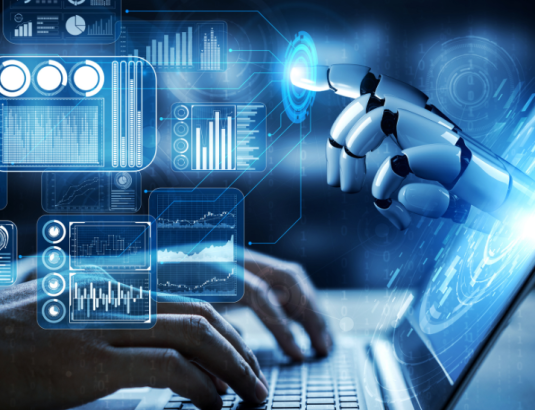
AI has become a vital ally in cybersecurity, enabling faster detection and identification of potential threats. Cybersecurity firms are deploying AI-powered platforms that monitor network activity in real time, analyzing data and files to detect unauthorized communications, suspicious connections, abnormal credential usage, brute-force login attempts, and data exfiltration. These systems allow organizations to gain actionable insights and address anomalies before they escalate into serious incidents.
AI also enhances network monitoring and threat detection by filtering out background noise, prioritizing critical alerts, leveraging evidence-based contextual data, and performing automated analyses using correlation indicators from threat intelligence sources.
At the same time, the expansion of on-premises systems, cloud computing, and edge computing has made the IT landscape for many organizations more complex and distributed than ever before.
There is a fine line between the benefits and risks of these technologies, as both defenders and attackers can exploit them. The key to leveraging their full potential while ensuring protection lies in education, awareness, and continuous infrastructure assessment, knowing precisely what your organization needs to stay secure.
Regulatory frameworks are also evolving to ensure that AI is developed and deployed safely. The European Union’s AI Act, the world’s first comprehensive legal framework for artificial intelligence, introduces a risk-based approach that classifies AI systems according to their potential impact. High-risk systems, including those used in critical infrastructure, cybersecurity, and biometric identification, must comply with strict requirements for transparency, accountability, robustness, and cyber resilience, while certain AI practices deemed harmful are prohibited altogether. As organizations increasingly adopt AI-driven solutions, aligning with these regulations becomes essential not only for compliance but also for building trustworthy and secure digital ecosystems.
At Info Quest Technologies, we offer a comprehensive portfolio of cybersecurity solutions and services from leading global partners, helping organizations safeguard their infrastructure, strengthen their cybersecurity posture, and stay resilient in an ever-evolving digital landscape through continuous innovation, expert support, and a commitment to building a safer, smarter, and more trusted digital future.