



Blog Archives



European Union’s Cybersecurity Act 2 establishes a new framework to safeguard supply chains.
In January 2026, the European Commission introduced a significant development in the realm of EU cybersecurity with the proposal of the Cybersecurity Act 2 (CSA2). This ambitious update replaces the 2019 framework with stronger supply chain security, simplified certifications, and an expanded ENISA mandate. For Greek tech firms, this situation serves as a crucial reminder to reevaluate vendor risks.
The Supply Chain Revolution
CSA2 introduces the EU’s first horizontal ICT supply chain framework, targeting NIS2 sectors. The Commission is authorized to designate “key ICT assets” (e.g., critical network components) via coordinated risk assessments. Suppliers or third countries can be labeled as “high-risk” based on non-technical threats, such as vulnerability reporting laws or state-sponsored cyber activity.
What are the consequences of this? Union-wide restrictions include bans from standardization, certifications, public procurement, and EU funding. NIS2 entities are subject to restrictions on the use of high-risk components in critical assets, along with mandatory mitigations such as transparency audits, data transfer restrictions, supplier diversification, and personnel vetting. Telecommunications companies are particularly affected by the 36‑month phase‑out for mobile networks. The European Commission has proposed a cybersecurity act, which would establish new EU supply chain rules and certification reforms.
Simplified Binding Certifications
CSA2 streamlines the European Cybersecurity Certification Framework (ECCF) for faster rollout (within 12 months). Certifications now encompass a wider range of postures, including products, services, processes, and managed security, with the assumption of NIS2 compliance. This strategic approach transforms voluntary programs into tangible procurement benefits. For insights into the regulatory outlook for February 2026, please visit our Osborne Clark website.
ENISA’s Expanded Role
The EU Agency for Cybersecurity (ENISA) is assuming a more active role, coordinating risk assessments, supporting certifications, and advising on high-risk designations. Expect increased oversight at the union level. For insights into the regulatory outlook for February 2026, please visit our Osborne Clark website.
Business Impact
Penalties amounting to 7% of global revenue may be imposed for infractions. It is imperative that telecommunications, finance, energy, and critical infrastructure sectors conduct audits of their supply chains, with a particular focus on potential exposure to China and Russia. Procurement policies, vendor contracts, and diversification become essential components of compliance.
Info Quest Technologies is dedicated to ensuring that its clients are fully prepared for any challenges they may encounter.
Info Quest Technologies is a leading Microsoft partner that delivers solutions that can help enterprises stay ahead of CSA2. For more information, please visit our website: https://www.infoquest.gr/en/our-solutions






Copilot Studio: The Business ROI from Custom AI Agents
Microsoft Copilot Studio delivers immediate business value by enabling non-technical teams to build custom AI agents that automate repetitive work, improve customer experiences, and accelerate decision-making – all without coding or external consultants.
ROI Beyond Chatbots
Traditional chatbots are designed to address frequently asked questions. Copilot agents are responsible for orchestrating outcomes:
• Customer Service: Implement a strategy to reduce live agent time by 40% by automatically resolving tickets and only escalating complex cases with full context.
• Sales: Accelerate the qualification of leads by threefold through conversational scoring, immediate pricing, and calendar synchronization.
• Operations: By leveraging artificial intelligence (AI) data extraction and ERP posting, invoice processing can be reduced from days to minutes.
Three Revenue-Focused Use Cases
1. The Revenue Recovery Agent is a comprehensive tool that helps businesses manage their financial operations. It scans overdue invoices, creates personalized payment reminders, offers installment options, and logs outcomes. By leveraging this tool, businesses can streamline their cash recovery process without the need for dedicated accounts receivable staff.
2. Upsell Engine
A customer inquires about Product A. An agent then cross-sells B/C products based on the customer’s purchase history. The agent calculates discounts, generates quotes, and emails signatures via DocuSign.
3. Employee Onboarding
A new hire inquired about the process for submitting expenses. The agent utilizes the Expense App to efficiently manage expenses. This includes scanning receipts using a QR code, validating them against the established policy, and submitting them to the ERP system for processing. HR focuses on strategy.
The Low-Code Advantage
Business analysts can build in hours using:
• No-code connectors: M365, ERP, CRM, DocuSign
• Point-and-click flows: The use of if/then logic, API calls, and approvals is essential for effective business operations.
• Generative AI: Natural language responses from your documents
• Built-in analytics: Monitoring agent performance and tracking cost savings
Total cost: Internal resource time vs. $100K+ custom dev projects.
Governance That Scales
Enterprise-grade controls ensure compliance:
• The data remains within your tenant, with no external training necessary.
• The process of escalating to human involvement for high-risk decisions is a critical step in our company’s protocol.
• We maintain comprehensive audit trails for each interaction.
• The NIS2/GDPR alignment is ready for immediate implementation.
Sustainability for Business
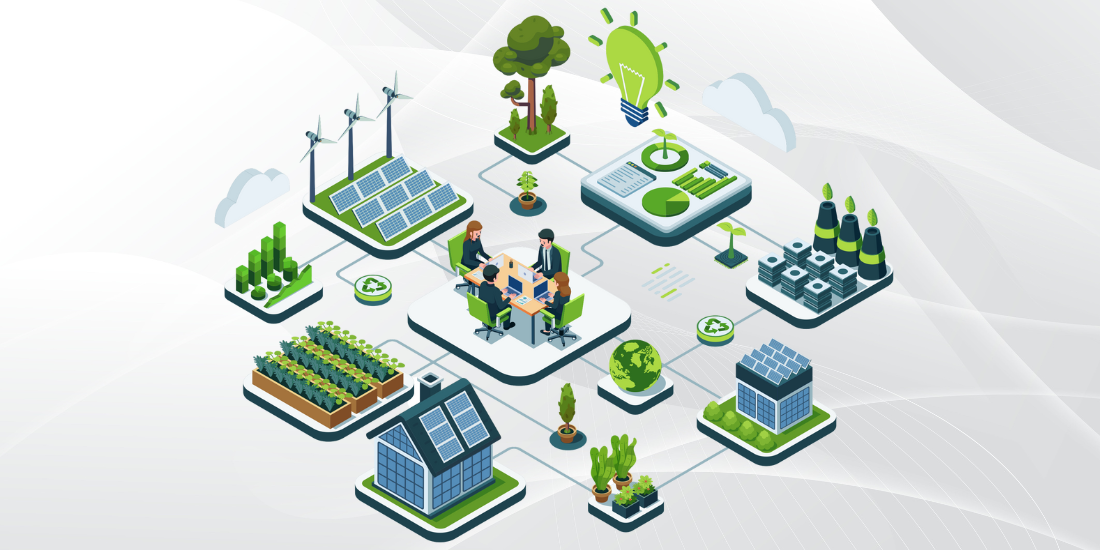
Climate change and environmental issues are causing growing concern and reactions both in societies and organizations. In this context, the European Union has enacted a law requiring businesses above a certain size to disclose information about the risks and opportunities arising from social and environmental issues, as well as the impacts of their activities on people and the environment. The goal is to reduce their environmental emissions, creating both pressure and opportunities for businesses to set and achieve sustainability targets.
Business sustainability refers to the strategy and actions of a company aimed at reducing the negative environmental and social impacts of its operations in the market. Sustainability practices are usually assessed based on environmental, social, and governance (ESG) criteria.
Let’s look at some examples of sustainable practices from businesses:
Improving energy management efficiency by adopting alternative energy sources.
Developing infrastructure that limits greenhouse gas (GHG) emissions, protects water resources, and eliminates waste.
Operating efficient supply chains to strengthen the circular economy, promote reuse, design waste-free systems, encourage sustainable consumption, and protect natural resources.
Promoting sustainable development through risk assessment and resilience improvement, while adhering to external regulatory requirements and development goals.
In addition to compliance with regulations and adoption of sustainable practices, businesses must also foster a culture of innovation and collaboration to drive long-term sustainability. This includes investing in research and development of new technologies that reduce environmental impacts, collaborating with other organizations and stakeholders to share knowledge and best practices, and empowering employees to contribute to sustainability initiatives. By creating an environment where sustainability is integrated into every aspect of the business model, companies can build resilience, enhance their reputation, and create lasting value for both society and the environment.
Sustainability must be at the core of a company’s strategy and activities, as consumers are willing to pay more for products from brands that uphold environmental responsibilities. Moreover, governments, investors, employees, and customers demand greater accountability from businesses, including actions to combat climate change.
Companies must comply with environmental regulatory requirements and deadlines while improving their resource consumption.
Digital technologies such as artificial intelligence (AI), the Internet of Things (IoT), blockchain, and cloud computing play a significant role in implementing sustainability. The key to a successful sustainability strategy is balancing environmental factors with the key differentiators and industry demands. Therefore, sustainability remains a continuous trend that will continue to deeply influence competitiveness and even the survival of companies in the market.
This proactive approach not only strengthens a company’s sustainability performance but also positions it as a leader in the growing circular economy, where consumers and investors increasingly favor businesses that prioritize environmental and social responsibility.

Security in the era of Quantum Computing
Quantum computing is a revolutionary technology that harnesses the fundamental principles of quantum mechanics to solve problems that go beyond the capabilities of traditional computers. It is expected that quantum technology will soon be able to solve complex issues that supercomputers cannot manage or process at the same speed. The main difference between quantum computers and classical ones is the use of quantum bits, or qubits, which allow them to process information in a completely different way.
To fully understand the significance of quantum technology, it is essential to refer to the basic principles of quantum computing:
Superposition
In this case, a quantum particle tends to serve as a combination of possibilities rather than just one, allowing the processing of multiple data in parallel layers.
Entanglement
This phenomenon involves the creation or interaction of a group of particles that are connected in such a way that the state of one instantly affects the state of the other, regardless of the distance.
Decoherence
Quantum systems can lose their quantum properties and transform into classical systems due to interaction with the environment.
Interference
This phenomenon occurs when subatomic particles interact and influence both themselves and other particles when in a superimposed state.
These fundamental principles enable quantum computing to offer significant advantages, particularly in the fields of cryptography and data security. Because of these capabilities, quantum computing can bring enormous benefits to businesses and reshape strategies across all sectors. However, the development of secure cryptographic techniques that can withstand the quantum era is crucial to protecting sensitive data.
With the advancement of quantum computers, traditional encryption methods based on difficult-to-solve problems (such as public-key encryption algorithms) will become vulnerable to quantum hackers. The need for quantum-safe cryptography is more urgent than ever, particularly in fields like national security and healthcare, where data security is critical.
Researchers and organizations around the world are developing new cryptographic algorithms designed to withstand quantum attacks to ensure the security of data in the quantum computing era. As quantum computers approach practical applications, transitioning to new cryptographic systems that are resistant to quantum attacks is essential to maintain trust in digital mechanisms and online transactions.
Companies like Microsoft are already investing in the future development of quantum computing, recognizing the need for preparation, as quantum technology could bring revolutionary changes to security infrastructures. Both government and private organizations must prepare for the next generation of cryptography, which will define the security of the digital age.

Circular Economy Business Models
The pressing economic and environmental challenges of today underscore the urgent need for businesses to adopt a circular business model. This approach not only reduces environmental impact but also ensures long-term growth and resilience. A business model helps a company target its audience, create value, define services, and more. Circular economy business models serve the same purpose—addressing environmental constraints while enabling businesses to operate within ecological boundaries and build sustainable resilience. Beyond their environmental benefits, these models also offer social advantages.
For businesses, circularity enhances competitiveness by improving bottom-line results through resource efficiency. However, implementing a circular model can be challenging due to the difficulty of identifying the right approach that aligns with a company’s specific strategy.
The Three Key Pillars of the Circular Economy:
- Reduce waste and pollution.
- Reuse products and materials.
- Recycle to regenerate nature.
When businesses adopt a circular model, they typically begin with one of the following strategies:
1. Extending Product Lifespan
Companies aim to extend product lifespans through recycling, resale, or repair, reducing both waste and the need for new resources. However, consumer preferences pose a challenge. Businesses must design products with longevity in mind, emphasizing durability, modularity, and ease of disassembly. Achieving this requires developing repair and refurbishment capabilities, either in-house or through strategic partnerships. Effective collaboration between product development teams and external partners is crucial.
2. Promoting Product Reuse
It is important to differentiate between technical and biological resources, as each requires a distinct approach. Reuse often involves transforming discarded materials into new products through intermediate processing. Designing products with recyclability in mind is key, as is ensuring easy disassembly to facilitate refurbishment or recycling.
3. Maximizing Product Utilization
Another approach is shifting from ownership to access-based models, such as rentals or subscription services. These strategies enhance circularity by increasing asset utilization and incentivizing customers to use products more efficiently. The success of this model depends on well-designed services that align financial, operational, and sustainability incentives between providers and customers. Responsible resource use by both parties is essential to achieving circularity goals.
4. Minimizing Resource Use
Optimizing asset capacity is a priority. Shared resources, such as co-working spaces or shared production facilities, improve space and equipment utilization. Designing adaptable buildings allows for flexible use across different functions. Leveraging data analytics is also crucial—advanced digital tools can provide insights to minimize resource consumption and waste generation.
By integrating these principles, businesses can successfully transition to circular models, achieving both economic and environmental benefits while fostering resilience and sustainability.
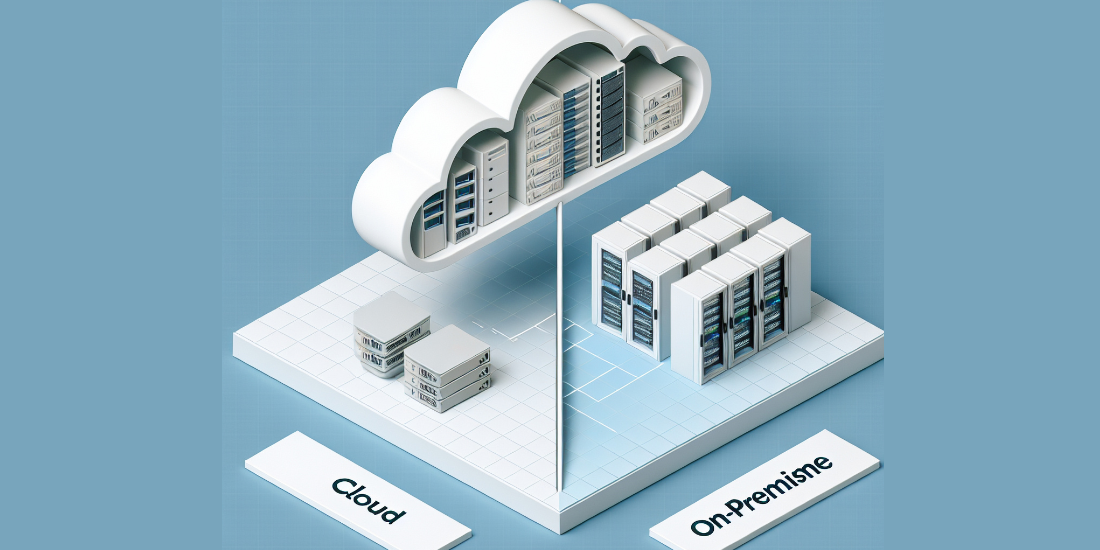
On Premise vs. Cloud: Advantages and Disadvantages
Many businesses, regardless of size, wonder what the best solution is: On-Premises or Cloud?
Although cloud computing is dominant, many still prefer the traditional on-premises solution. The decision may seem difficult, but it is crucial to understand the differences, benefits, and challenges of each option to choose the best solution for your business.
Special attention should be given to storage and software, as these are critical factors for any business. Info Quest Technologies offers products and services tailored to every environment, allowing businesses to efficiently manage their data in the cloud, on-premises, or in hybrid systems.
On-premises Computing
The on-premises model is a traditional solution that businesses used to prefer in the past, where the software, resources, and infrastructure are managed directly within the organization’s facilities. With this model, the organization assumes full responsibility for controlling the infrastructure, as well as for installing and maintaining its systems. As is evident, the business is not dependent on third parties and retains full control over its IT environment. Overall, the on-premises model refers to software or computing processes that are executed on the internal physical infrastructure of a company, which is hosted and managed locally by its IT team.
On-premises Computing: Pros and Cons
- The fact that a business has full responsibility and control over the model makes it more secure, without involving third parties and without putting data at risk.
- On-premises environments allow businesses to monitor and enforce compliance with regulations and internal standards directly. This way, it is easier to follow the business’s requirements.
- An internet connection is not necessary, and it does not depend on external networks or data centers.
While it offers high security and control, it also presents certain challenges for a business or organization.
- Since the IT team of a business is fully involved with the on-premises model, they must also have the required number of employees to ensure nothing is overlooked, consuming time and resources.
- It is considered an expensive solution due to the initial costs, such as hardware purchases and software licenses.
- The organization is limited in adapting to changing conditions, as this process can become time-consuming and costly.
Cloud Computing
On the other hand, there is cloud computing, which is managed by third-party providers who host and manage the organization’s data and infrastructure. By paying a subscription, the involvement of the business’ IT team is not required. In short, the cloud provider takes care of the maintenance of the infrastructure, including backups and upgrades, allowing businesses to focus on their core functions.
Cloud Computing: Pros and Cons
- The installation of cloud is not time-consuming; on the contrary, resources are provided in a short amount of time.
- By paying a simple subscription, businesses or organizations save costs that they can invest elsewhere.
- The providers are the ones who manage the updates and maintenance of the system, so the business’ IT teams do not need to handle these issues.
- It allows employees to access data and applications from any device connected to the internet, enhancing productivity and mobility.
- Easier backup creation of data.
Even in this case, there are certain disadvantages to keep in mind:
- Dependence on the provider may cause some disruptions in the business’s operations.
- Cloud computing depends on an internet connection, which means that when there is a connection failure, issues may arise.
- Businesses must confirm that the cloud provider complies with industry regulations.